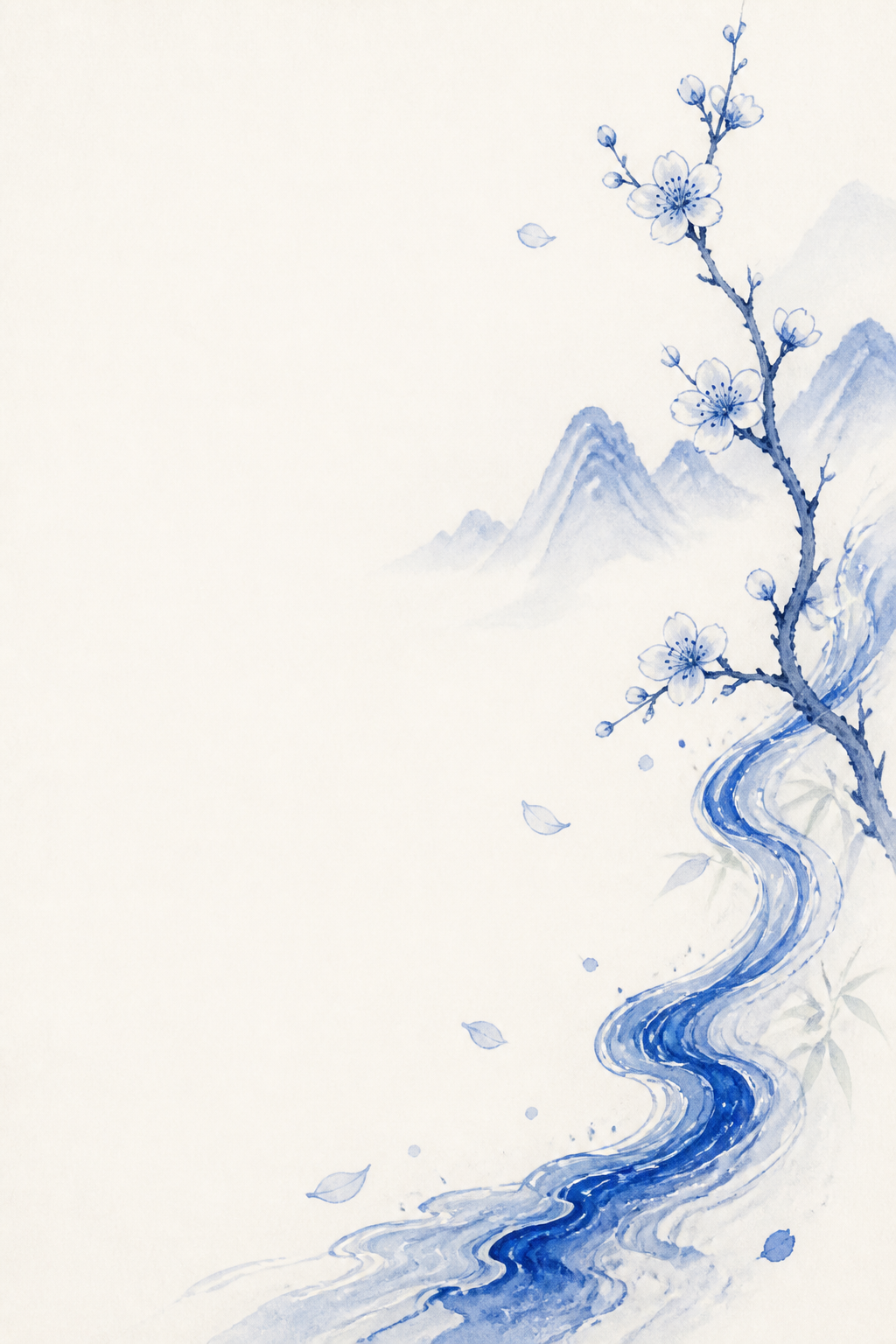
山居秋暝 original text
Stay close to the sentence.
An empty mountain after fresh rain, the weather becomes autumn in the evening.
The bright moon shines between the pines; clear spring water flows over the stones.
Bamboo murmurs as washerwomen return; lotus leaves move as fishing boats go down.
Let spring fragrance fade as it wishes; the noble one may remain here.
Let the image breathe.
Fresh rain has washed the empty hills; evening brings the air of autumn.
Moonlight falls through the pines, and a clear spring runs over stone.
Bamboo stirs with returning washerwomen; lotus leaves part for fishing boats.
Let spring’s flowers fade. A good life can still be found here.
What to know
The poem is a classic example of a mountain retreat rendered through sound as much as sight. Its final line shifts from description to choice, suggesting that a life away from public bustle can remain meaningful after the season changes.
What to notice
The landscape is active but never crowded. Rain clears the air, moonlight opens the pines, water keeps moving, and human figures appear briefly through sound and motion. Nature and ordinary work belong to the same balanced world.
Three useful phrases.
- 空山
- empty or quiet mountain; not necessarily a completely uninhabited place
- 浣女
- women washing clothes by the water
- 王孫
- a noble person, or an allusion to the cultivated person who may choose to stay