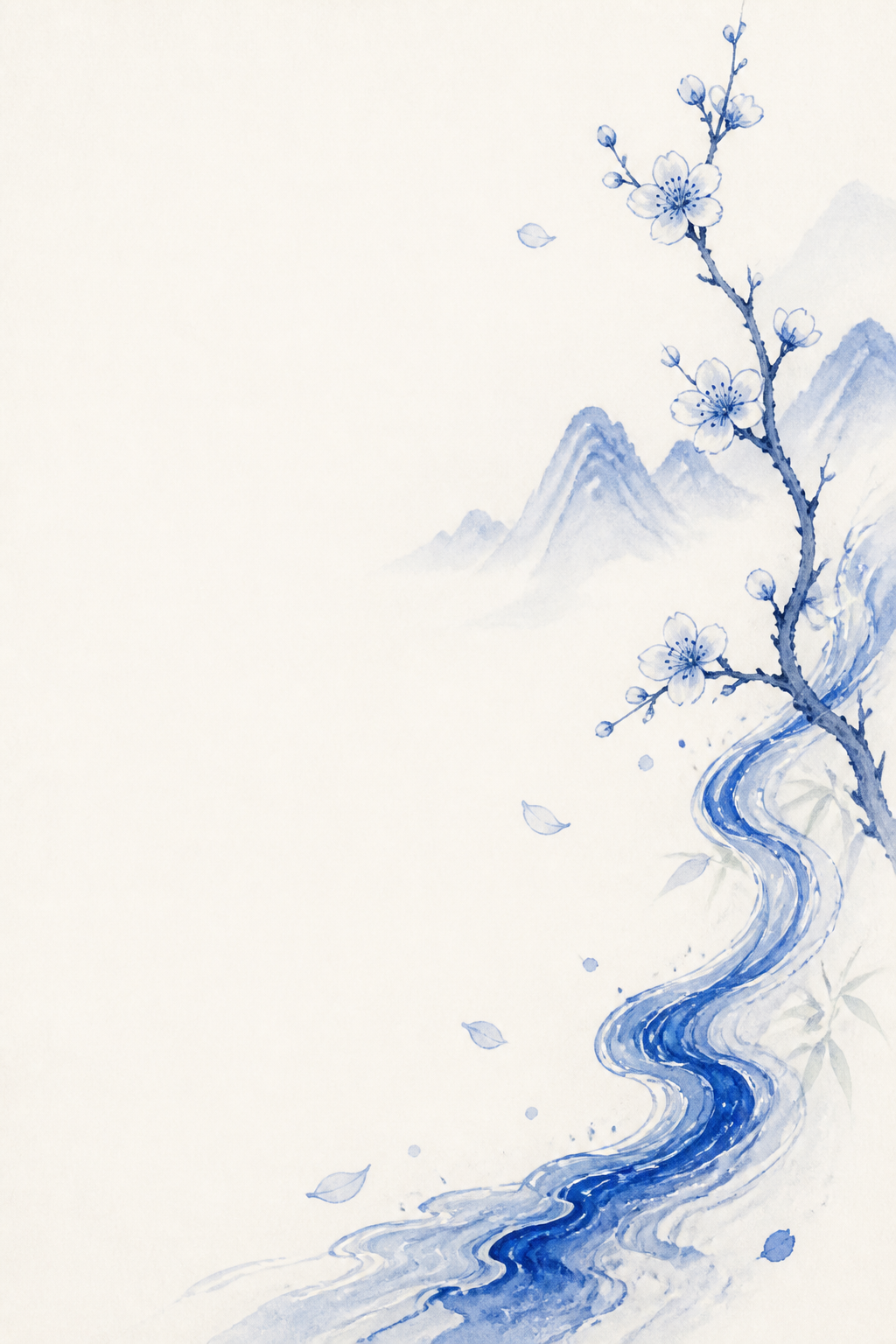
春曉 original text
Stay close to the sentence.
In spring sleep, I do not notice dawn.
Everywhere, I hear the cries of birds.
Last night came the sound of wind and rain.
I wonder how many flowers have fallen.
Let the image breathe.
I slept through spring’s dawn,
waking to birdsong everywhere.
Through the night, wind and rain were sounding.
How many blossoms must have fallen?
What to know
Meng Haoran is known for poems that find depth in apparently simple scenes. This poem does not describe spring in full; it lets the listener reconstruct the season from what can be heard before the day is fully visible.
What to notice
The final question introduces impermanence without turning the poem into a lesson. The beauty of spring is present precisely because flowers can fall, and the speaker’s first response to the day is a mixture of pleasure and quiet concern.
Three useful phrases.
- 春眠
- sleep in spring, with a sense of soft and unhurried rest
- 啼鳥
- birds calling or singing
- 知多少
- who knows how many; a gentle rhetorical question